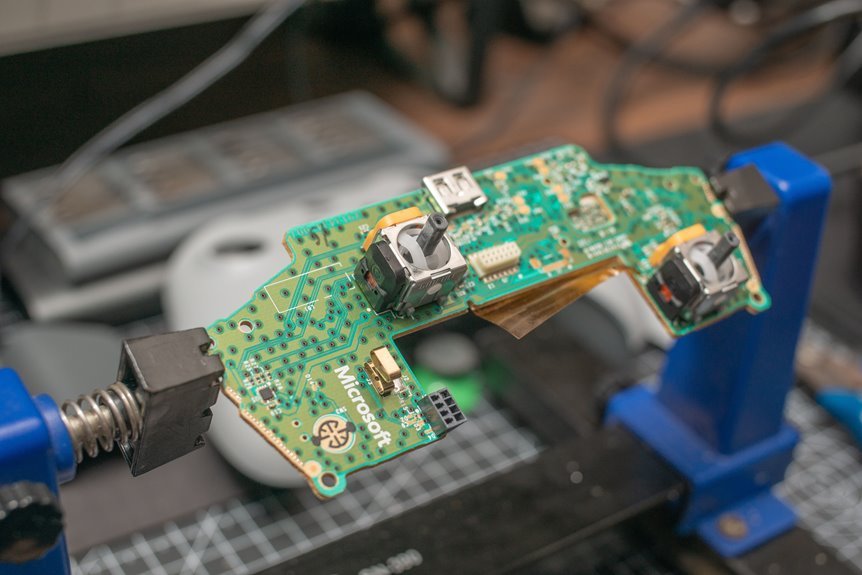
The NebulaCircuit Tracking Console provides a centralized view of identifiers 3348310681, 8668536098, 7703875024, 3925211816, and 2067754222. It combines Cloud Basics, Data Pipelines, Network Topologies, and Visualization UI into a real-time surface. Ingestion preserves data fidelity with a lightweight processing layer and ordered, resilient streaming. The architecture scales for bursts, while dashboards translate signals into actionable paths. A precise pattern emerges, but gaps invite a closer look at how each module interacts under stress.
What Is the Nebulacircuit Tracking Console and Its Core Modules
The NebulaCircuit Tracking Console is a centralized system designed to monitor, analyze, and visualize spatial and temporal data from nebular environments. It offers Cloud Basics, enabling scalable access; Data Pipelines that shuttle signals to storage and processing; Network Topologies ensuring resilient communication; and Visualization UI delivering concise, actionable views for users seeking freedom through clarity and control.
How Data Flows From Ingestion to Real-Time Visualization
How does data progress from ingestion to real-time visualization within the NebulaCircuit Tracking Console? Data ingestion feeds structured streams into a lightweight processing layer, preserving fidelity. Event streaming ensures order and resilience, while a scalable pipeline handles bursts. Real time visualization subscribes to processed data, updating dashboards instantly. System scalability sustains throughput, enabling continuous insight without latency or loss.
Comparing 3348310681, 8668536098, 7703875024, 3925211816, and 2067754222: Use Cases and Strengths
In the NebulaCircuit framework, comparing the identifiers 3348310681, 8668536098, 7703875024, 3925211816, and 2067754222 highlights distinct use cases and inherent strengths across data contexts.
The analysis outlines concept tradeoffs and usage scenarios, clarifying how each identifier excels in throughput, fidelity, or latency.
Decision-makers gain a concise map for selecting appropriate tracking paths aligned with freedom-oriented objectives.
Best Practices for Deploying the Console in Demanding Networks
Deploying the NebulaCircuit Console in high-demand networks requires rigorous planning, robust resource management, and resilient fault handling.
Operators should implement latency budgeting to meet service-level expectations without overprovisioning.
Establish ongoing scalability testing to validate capacity under peak loads, plus defined rollback procedures.
Documented configurations, automated health checks, and clear incident protocols enable rapid isolation and continuous operation in demanding environments.
Frequently Asked Questions
How Secure Is Nebulacircuit Tracking Console Data at Rest?
NebulaCircuit data at rest employs robust security policies and data encryption, ensuring confidentiality and integrity. Access is governed by strict controls, with regular audits. Encryption keys are protected, and evolving policies adapt to emerging threats and compliance standards.
What Hardware Requirements Maximize Peak Performance in Dense Networks?
Maximize peak performance in dense networks with high frequency processing hardware, scalable cores, and low-latency interconnects; prioritize quantum safe cryptographic acceleration and memory bandwidth, ensuring deterministic latency under load.
Can the Console Operate Offline During Network Outages?
The console supports offline mode during network outages, enabling continued local data capture and temporary analysis; however, full functionality relies on network access. This design prioritizes network resilience and autonomous operation for freedom-minded users.
How Are License Entitlements Managed Across Multiple Nodes?
License entitlements are synchronized across nodes via node synchronization, ensuring consistent access rights. Data encryption protects entitlements in transit and at rest. Offline operation remains limited; integration points enable centralized management while preserving autonomy and freedom at each node.
What Are Common Integration Points With Third-Party Analytics Tools?
Integration points with third-party analytics tools include REST/SDK integrations, event streaming, and webhooks, emphasizing integration latency, data normalization, offline resilience, and license portability to support flexible, autonomous data workflows across heterogeneous environments.
Conclusion
The NebulaCircuit Tracking Console offers a disciplined, low-variance view of multi-identifier telemetry, weaving ingestion, processing, and visualization into a steady operational rhythm. While the system gracefully absorbs bursts and preserves data fidelity, it remains a measured companion for decision-making rather than a sweeping disruptor. In practice, users may find stability and clarity through its modular design, enabling careful, incremental optimization rather than sudden, sweeping changes.
